
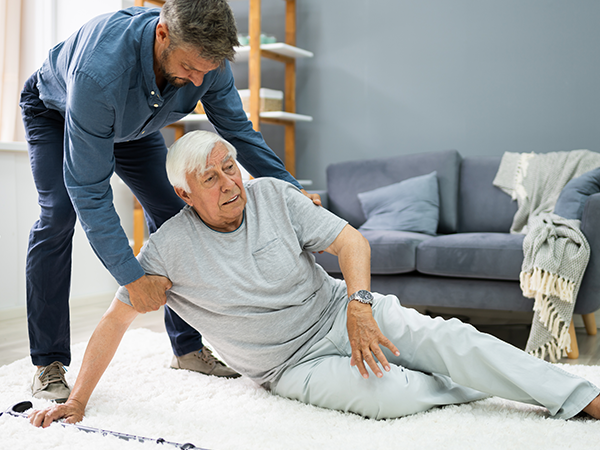
Reaching the golden years comes with a lot of upsides. You have more free time, more control over your schedule, and more wisdom to carry you through life’s ups and downs. Unfortunately, it’s also normal to experience some less-than-ideal health changes. That’s why it’s smart to be aware of the top fall risk warning signs—before a fall actually happens.
But being informed doesn’t mean you have to live with a constant fear of falling! While it’s true that about one out of every four older adults falls each year, you do have the power to minimize your own personal risk.
Whether you walk daily down the Boynton Beach waterfront or want to feel more confident navigating your Palm Beach County home, this guide will help you recognize the early warning signs so you can take action before a fall happens.
Physical Warning Signs Your Body Sends
Long before you endure a fall, your body is likely sending you some warning signals. These go beyond what you might think of as ‘classic’ balance problems in seniors:
1. You’re grabbing furniture or walls for support when you walk. This is a clear sign that your body doesn’t trust its own balance.
You see, as humans, we’re born with a very strong, but subconscious, sense of balance. Our eyes, ears, and muscles are constantly sending information to our brains about our environment, and our brain makes adjustments—often without us even noticing.
If you find yourself reaching out to steady yourself “just in case,” that’s a fall risk warning sign.
2. You feel unsteady when you stand up from a seated position. This experience can be caused by one of several things, like your blood pressure or your overall body strength.
The good news is, regardless of the root cause, it can be addressed through physical therapy and balance training.
3. You’ve recently had a close call or a “near-fall.” According to research, your chances of falling double after you’ve fallen once. That said, even close calls and “near-falls” are still a fall risk warning sign.
Think about your day-to-day life. What are the odds that the next time you feel unsteady or stumble, you’ll be able to stop yourself from falling like you did the first time?
4. Your legs feel weak when climbing stairs or getting up from chairs. No matter who you are, it’s natural for muscle strength to decline as you age. But the effects extend beyond just your strength—your flexibility will decline a bit, too.
But when you get to the point of feeling weak when you climb stairs or stand up, it’s a clear sign that your risk of falling is increasing.
5. You’re avoiding activities you really enjoy. If you’ve stopped going to social events, sworn off your beach walks, or quit golf because you’re worried about falling, you’ve likely noticed other warning signs too.
But know that noticing these shifts means you can do something about them, and ultimately, reclaim the fun you’ve felt forced to give up.
These physical signs are your body’s early warning system. But there are other signs that are just as important, and far more subtle.
Subtle Changes That Signal Increased Fall Risk
The truth is, you can have a risk of falling even if you’ve never fallen before. We don’t say this to scare you, but to illustrate just how normal it is to fear falling, regardless of your past track record.
Plus, having this fear often indicates you’re experiencing some of the more subtle signs of increased fall risk. Think about whether you’ve noticed any of the following in recent months:
1. You’ve started shuffling your feet instead of taking full steps. Shuffling feels safer—your feet stay closer to the ground, so you think you’re protecting yourself. The truth is, shuffling actually increases your fall risk.
When you shuffle, you’re more likely to catch your toe on rugs, uneven pavement, or even small cracks in the sidewalk. Plus, shuffling means you’re not fully engaging the muscles in your legs and core, which weakens them over time.
2. You have trouble seeing curbs, steps, or changes in flooring. Vision changes are one of the biggest fall risk factors, but they’re often overlooked. As we age, it’s harder to judge depth and spot differences in surface height, like stepping off a curb or noticing where tile meets carpet.
This is especially dangerous here in Florida, where you might go from bright sunshine outside to a dimly lit restaurant or home.
3. You feel dizzy when you move your head quickly or look up. If you feel lightheaded when you tilt your head back to check a shelf or turn quickly to answer someone, that’s often related to your vestibular system (the part of your inner ear that controls balance).
The good news? This type of dizziness is highly treatable with physical therapy. Vestibular therapy can retrain your brain and body to handle those movements without the dizziness.
Environmental Red Flags in Your Home
Your body isn’t the only thing that can put you at risk. Your home environment plays a huge role, too. Even if you’re working on your strength and balance, certain hazards in your living space can still lead to a fall.
Here are the most common environmental red flags to watch for:
1. You have loose rugs or carpets. Loose rugs are one of the most common tripping hazards, especially if the edges curl up or the rug slides around when you step on it. If you love the look of area rugs, use non-slip pads underneath them, or better yet, remove them from high-traffic areas like hallways and entryways.
2. Your home has poor lighting, especially at night. This is especially risky at night when you’re moving from your bedroom to the bathroom. Consider adding nightlights in hallways and bathrooms, and make sure light switches are easy to reach when you enter a room. Motion-sensor lights can also be a great solution.
3. Your walking paths are often cluttered. Shoes by the door, stacks of mail on the floor, or even a pet bed in the middle of the hallway—all of these create obstacles you have to navigate around. When your path isn’t clear, you’re more likely to trip or lose your balance trying to avoid something.
4. You have no grab bars in bathrooms. Bathrooms are one of the most dangerous places in the home for falls. Wet surfaces, hard floors, and the need to balance on one foot while getting in and out of the shower all add up to serious risk. Grab bars give you something stable to hold onto, which can prevent a slip from turning into a fall.
5. Areas of your home have slippery floors (tile can be especially dangerous when wet). Florida homes often have tile floors throughout, which look great but can be slippery—especially near pool areas or after coming in from outside with wet feet.
Take a few minutes to do a “walk-through” of your home looking for these hazards. You might be surprised at what you find, and even small changes can make a big difference in your safety.
What to Do If You Recognize These Warning Signs
If you’ve recognized any of these warning signs, the most important thing you can do is not ignore them. These signs don’t get better on their own—in fact, they usually get worse over time if left unaddressed.
At the same time, since you caught this early, you now have the opportunity to take action before a fall happens!
Start by getting a professional assessment. Physical therapists are trained to evaluate fall risk and identify your specific vulnerabilities. They can test your balance, assess your strength, analyze how you walk, and pinpoint exactly where you need the most support.
Next, talk to your doctor about your medications and any health conditions that might be contributing to your fall risk. Your doctor may be able to adjust your prescriptions, recommend vision or hearing checks, or refer you to specialists who can address underlying issues like dizziness or blood pressure changes.
Finally, start addressing the modifiable risks. Muscle weakness, poor balance, and reduced flexibility are all improvable with the right approach. Strength training, balance exercises, and mobility work can help you rebuild confidence in your movement.
You see, you don’t have to accept these changes as “just part of getting older.” With consistent effort and expert guidance, you can regain stability and feel safe in your daily activities again!
If you’ve recognized any of these warning signs in yourself or a loved one, our team at BCS Physical Therapy & Wellness can help you take proactive steps before a fall occurs.
Whether you’re concerned about navigating your Boynton Beach home safely or want to regain confidence in your daily activities, our therapists create personalized plans that address your specific risk factors.
Stop by our location at 10151 Enterprise Center Blvd, Suite 107, Boynton Beach, FL 33437, or call us at (561) 208-1008 to schedule your fall risk assessment.
FAQs About Fall Risk Warning Signs
Can physical therapists fit walkers or canes in Boynton Beach?
Yes, our physical therapists in Boynton Beach are highly qualified to help with assessing, selecting, and training with your walker or cane. We don’t view assistive devices as “giving up!”
These tools are designed to help you safely maintain your independence. That’s why, as part of your physical therapy with us, we can evaluate which would be best for you and teach you proper technique.
Can I get a fall risk assessment in Boynton Beach, FL?
Yes, a key part of our Boynton Beach balance training program is your initial fall risk assessment. During this process, we’ll not only test your balance but also assess your overall strength and analyze your gait.
You should also know that when your doctor deems physical therapy as medically necessary, Medicare typically pays up to 80% once you’ve hit your deductible. Let us know if you’d like more info about using Medicare to pay for your sessions.
How can physical therapy in Boynton Beach help me stay independent longer?
Physical therapy in Boynton Beach can help you stay independent longer because this work addresses the true root causes of fall risk:
- Strength and endurance – Strength training designed to help you build muscle for everyday tasks like carrying groceries
- Mobility and flexibility – Exercises to increase your range of motion and make walking, climbing stairs, and traversing uneven surfaces easier
- Pain management – Therapy that targets chronic pain to restore function and reduce the need for medication
At BCS Physical Therapy & Wellness, every element of your PT is tied to the activities that matter most—playing with grandkids, continuing your beach walks, maintaining your golf game, and being able to travel without worry.
Medical Disclaimer
The information provided in this blog is for educational purposes only and is not intended as medical advice, diagnosis, or treatment. Always seek the advice of your physician or other qualified health provider with any questions you may have regarding a medical condition or treatment. Never disregard professional medical advice or delay seeking it because of something you have read on this website. If you think you may have a medical emergency, call your doctor or 911 immediately. BCS Physical Therapy & Wellness does not recommend or endorse any specific tests, physicians, products, procedures, opinions, or other information that may be mentioned in this article.